
Why Are Wedding Photos Tilted? Art, Trend or Editing Shortcut?
I actually think this is a fascinating topic because it sits right at the intersection of art, trends, and couples expectations from their photographer. And as wedding album designers, we are seeing these tilted photos popping up in clients photo galleries more and more.
Many photographers intentionally use tilted compositions as part of their visual language. But if you are questioning if tilted photo compositions are artistic, trendy or something else … read on.
Scroll through photographers portfolios on Instagram or Pinterest lately and you might notice something unexpected.
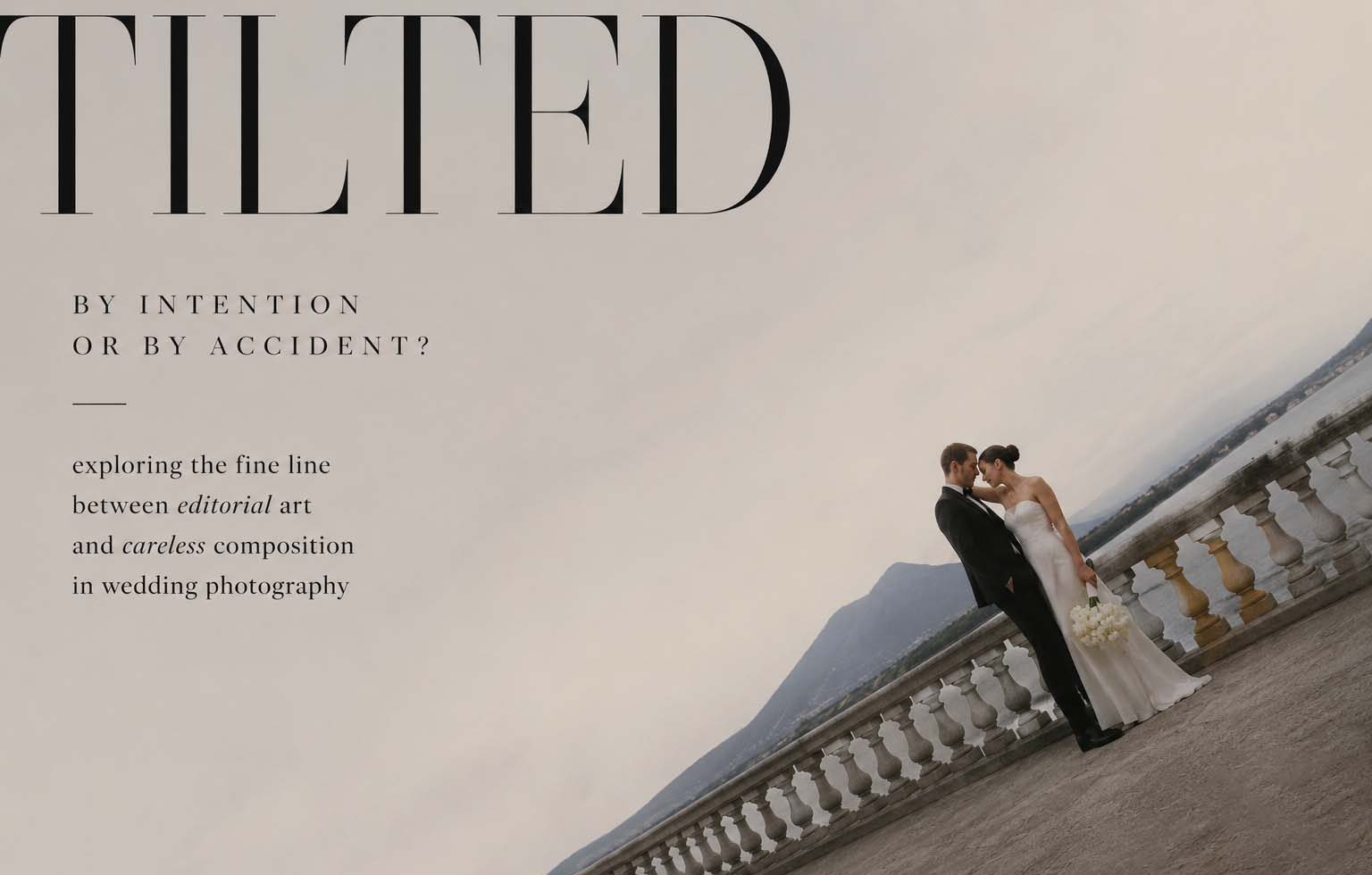
Photos are being captured on an angle, compositions are tilted.
Not just the occasional spontaneous moment where the camera tilts as the photographer runs backwards down the aisle. We’re talking about deliberately angled portraits, wonky horizons, tilted reception scenes and off-kilter compositions that look as though someone forgot to straighten them during the edit.
Is the tilt by accident or intentional?
For couples seeing these images for the first time, the reaction is often immediate.
“Is this meant to look like that?”
The answer is… sometimes yes, sometimes no.
But whether it’s brilliant artistry or simply a shortcut in editing depends entirely on who’s behind the camera.
The Return of the Tilted Dutch-Angle to Wedding Photography
If this style feels familiar, that’s because it isn’t new.
Tilted compositions, often called the “Dutch Angle” or “Dutch Tilt”, became hugely popular throughout the 1990s and early 2000s. Fashion magazines, music videos and editorial photography embraced imperfect framing to create energy, tension and movement.
Instead of feeling posed, photographs felt alive.
The trend eventually faded as wedding photography moved towards clean, balanced compositions inspired by fine art photography. Straight horizons, symmetrical architecture and carefully composed images became the luxury aesthetic for more than a decade.
Now the pendulum is swinging back to the titled image.
Why Photographers Love The Tilted Photo
Modern wedding photography has become increasingly documentary.
Photographers aren’t just recording what happened. They’re trying to recreate what it felt like.
A slight tilt can introduce movement, excitement and emotion into an otherwise static image.
Dance floors feel more chaotic.
Champagne towers feel more celebratory.
A couple running through confetti suddenly feels cinematic rather than staged.
Used intentionally, a tilted photograph can feel incredibly stylish.
Like any creative tool, it’s about knowing when to use it.
When The Tilt Starts Looking Forced
Every trend reaches a tipping point.
What begins as a thoughtful creative decision often becomes a preset.
Today, some galleries contain dozens, sometimes hundreds, of tilted images. Every portrait is angled. Every group shot leans. Every reception photograph feels as though the room was built on a hillside.
Instead of adding energy, the effect can become repetitive.
That’s when couples start wondering whether they’re looking at artistic intent or simply rushed editing.
A Great Photographer Doesn’t Need the Trend
The world’s best photographers have always understood something important.
Style should support the story. Not become the story.
If every image relies on the same editing trick, the photographs can begin to feel dated surprisingly quickly. Just as heavy HDR editing, selective colouring and sepia filters instantly place photographs in another era, today’s biggest trends will eventually reveal exactly when they were created.
The strongest wedding galleries tend to balance timeless images with contemporary creativity.
A dramatic tilted frame here.
A perfectly composed portrait there.
The result feels intentional rather than fashionable.
Think About Your Wedding Album
Here’s something couples rarely consider.
An Instagram feed lasts a few seconds. A wedding album lasts decades.
A single angled image can create a wonderful moment when turning a page.
Twenty consecutive tilted photographs can begin to feel visually exhausting.
Albums work best when they have rhythm.
Wide. Close. Calm. Energetic. Straight.
Then, occasionally, delightfully tilted.
It’s that variation that keeps your eyes moving through the story.
So… Art or Editing Shortcut?
The answer is both.
When a photographer deliberately tilts a frame to heighten emotion or create visual drama, it’s a genuine artistic choice rooted in decades of editorial photography.
When every image is tilted simply because it’s fashionable, or because straightening wasn’t considered important, the effect can feel more like following a trend than creating timeless photography.
Neither is objectively right or wrong.
The real question isn’t whether wedding photos should be titled. It’s whether every creative decision serves your story.
Because the best wedding photographs aren’t remembered for the angle of the horizon.
They’re remembered for how they make you feel twenty years later.